




The aim of these articles is to keep our Clients and Associates updated about developments in the sector of Intellectual Property in general and our firm in particular. In this way, we wish to provide a broader view of the tools that the field of trade marks, domain names, patents, designs and related rights offers to entrepreneurs to enhance and protect their efforts in researching and developing new solutions and ideas.
Spotlight on the Fifa World Cup | A design dispute to watch
For us Italians, it is perhaps still a little painful to write about anything connected with the FIFA World Cup... However, given the global attention currently focused on international football, this design dispute is certainly one worth following.
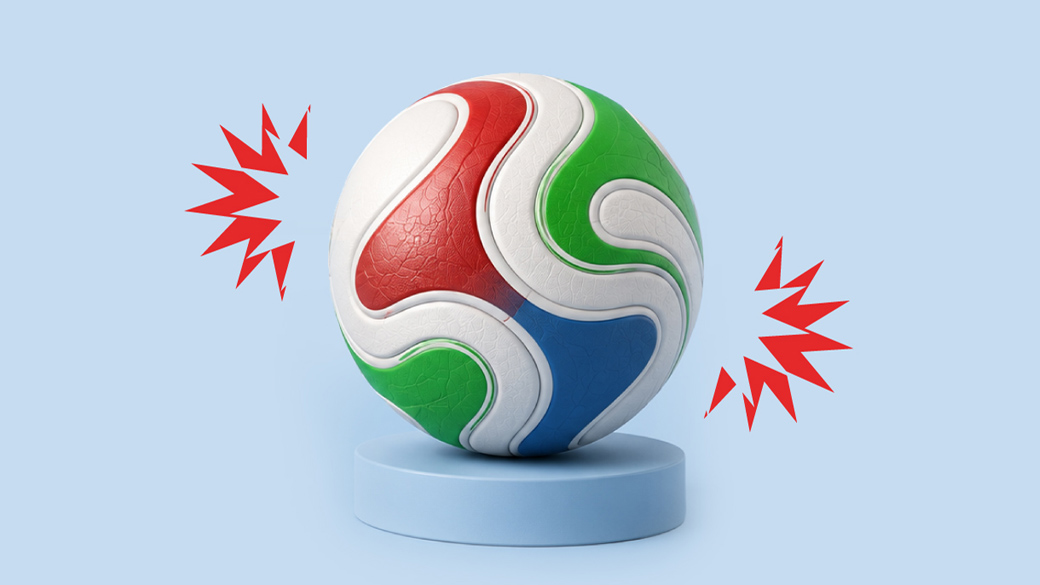
A German designer, Marius Dittmar, has initiated invalidity proceedings before the EUIPO against the Registered Community Design protecting Adidas' new "Trionda" official match ball for the 2026 FIFA World Cup. The applicant argues that the registered design lacks novelty and individual character in view of an earlier four-panel football design that he developed.
Although the dispute concerns a football, the legal issues involved extend well beyond sport. Adidas has been the official supplier of FIFA World Cup match balls for more than five decades, making each new design one of the most visible industrial designs in the world. The appearance of the official ball is not merely an aesthetic feature but a commercially valuable intellectual property asset, supported by substantial investment in research, engineering and global marketing.
Modern manufacturing techniques have enabled designers to reduce the number of panels and develop increasingly sophisticated geometries intended to improve aerodynamic performance, consistency in flight and production efficiency. As a result, the configuration and shape of the individual panels have become key elements of innovation and are often protected through registered design rights.
The outcome of the EUIPO proceedings could therefore extend beyond the parties involved. The decision is expected to provide further guidance on how the concepts of novelty and individual character should be assessed for product designs where relatively subtle geometric differences may have both technical significance and considerable commercial value. It may also influence the degree of freedom available to competitors when developing footballs with comparable visual characteristics.
We will continue to monitor this case and report on any significant developments, as it may become an important reference for design protection strategies in Europe.