




The aim of these articles is to keep our Clients and Associates updated about developments in the sector of Intellectual Property in general and our firm in particular. In this way, we wish to provide a broader view of the tools that the field of trade marks, domain names, patents, designs and related rights offers to entrepreneurs to enhance and protect their efforts in researching and developing new solutions and ideas.
Defending Authenticity: New Frontiers in the Fight Against Italian Sounding
According to data compiled by The European House – Ambrosetti – one of the leading think tanks in Italy assisting companies in establishing reports and setting up projects and events in several economic fields – the agri-food supply chain, comprising the agricultural sector, the food and beverage industry and the intermediary, distribution and restaurant sectors, has grown by 34% compared to 2015.
In 2023, the sector generated €74 billion in direct added value, a result worth 2.5 times more than the "Made in Italy" fashion and over 5 times that of the chemical industry. Italy is also the third-largest EU country in terms of agri-food added value, accounting for 3.9% of its gross domestic product (source: https://www.ambrosetti.eu/en/search/?search=italian+sounding).
The top four Italian regions for agri-food exports account for 62.1% of the national total, with Lombardy leading (€10.4 billion in 2023), followed by Emilia-Romagna (€9.8 billion), Veneto (€9.6 billion) and Piedmont (€8.9 billion).
Interestingly, though perhaps unsurprisingly, the Italian regions most skilled at exporting high-quality products abroad are also the ones most affected by the phenomenon of "Italian Sounding". In fact, Lombardy is the most affected region, with estimated losses of €10.2 billion per year, followed by Veneto (€10 billion) and Emilia-Romagna (€9.9 billion).
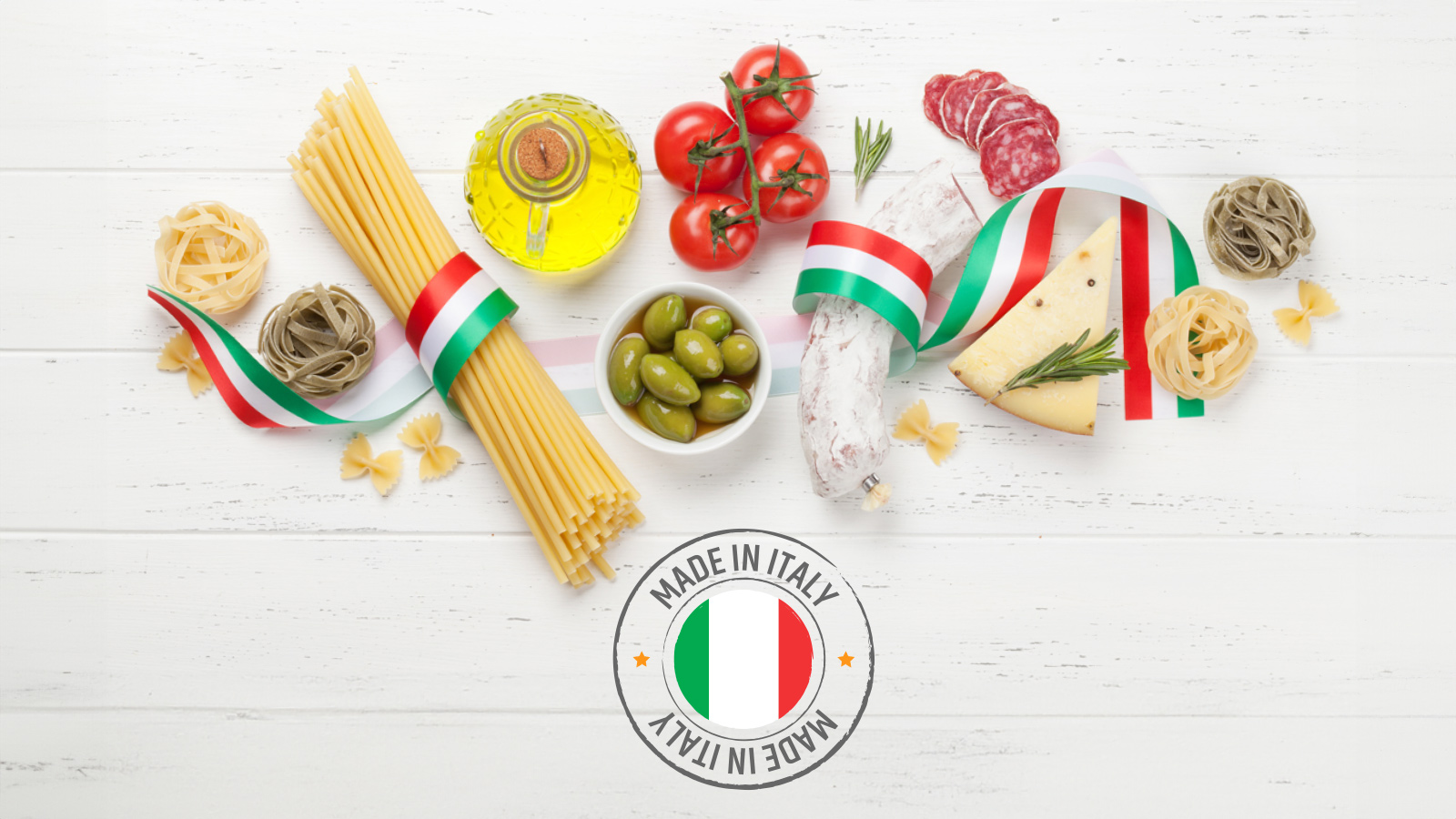
Italy’s ability to export excellence, as well as the presence of certified products (with 891 PDO and PGI products, Italy leads Europe in the number of certifications), makes our country particularly vulnerable to Italian Sounding, i.e. the practice of imitating Italian food, but also non-food, products for misleading commercial gain, through the use of names, images and color schemes that unmistakably evoke Italy.
According to the most recent projections, the value of Italian food & beverage exports would more than double if the impact of Italian Sounding on Italian companies’ flagship products could be eliminated.
Unfortunately, the new U.S. tariff policies are not helping. Italian Sounding products remain highly competitive because their average prices are lower than those of authentic Italian goods. In this context, the potential imposition of tariffs on Made in Italy products would likely lead to even higher prices for the originals, making the already cheaper "fake" products even more attractive. With €7.8 billion in exports, the United States is Italy’s second-largest market for agri-food products and these tariffs risk boosting the sales of non-authentic goods on the North American market.
So, what can be done to counter Italian Sounding? How can Italian companies recover, at least in part, the revenue lost over the years to products that clearly evoke our country but have nothing to do with Italy?
We attempted to provide some answers on June 17, when Alberto Furno from our firm (a.furno@interpatent.com) participated as speaker in an insightful event organized by the Chamber of Commerce of Turin: The Impact of Italian Sounding on the agri-food sector.
From a national legislative standpoint, it is worth highlighting, on one hand, the amendment to Article 144 of the Italian Industrial Property Code, which now includes Italian Sounding practices among acts of piracy. On the other hand, the establishment of the National Council for the Fight Against Counterfeiting and Italian Sounding – already discussed in an article in our November 2024 issue – an inter-ministerial body aimed at guiding, promoting and coordinating actions to enhance Intellectual Property and protect it from unfair economic competition.
At the European Union level, it is also important to mention the implementation of Regulation (EU) 2024/1143, concerning geographical indications for wines, spirits, agricultural products, traditional specialties and optional quality terms for agricultural goods.
As of 2024, this regulation represents a significant step toward greater protection for Made in Italy. For example, it strengthens the powers of consortia for defending GIs, increases consumer transparency through mandatory labeling of the producer’s name, enhances protection for Geographical Indications (GIs) even when used as ingredients and expands international GI protection.
From a socio-cultural point of view, Italian Sounding can be battled by effectively communicating the value of Made in Italy through targeted consumer education initiatives and, where possible, the involvement of brand ambassadors promoting Italian excellence worldwide.
In conclusion, the damage caused by the false evocation of Italian identity in the agri-food sector is immense. In a period of general economic crisis, protecting one of the few sectors in Italy still capable of generating added value must become a national priority. Some progress has been made on the legal front, but only through greater awareness among all industry stakeholders – and a stronger focus on protecting Italian Intellectual Property assets, from trademarks to PDOs and PGIs – can Italian food manufacturers/distributors and institutions hope to reverse the trend and eventually transform what is currently revenue for unfair competitors into revenue for Italian companies.